

Rachel Flowers lost her sight to retinopathy of prematurity as an infant. At two years of age, she was playing a toy piano, and by four years, she began formal training on piano. As a young adult, she is a multi-instrumentalist, vocalist, composer, recording artist, and producer.
Research shows that early blind children are more likely to show a particular interest in music than their sighted peers. Their musical abilities are more likely to be highly developed, and they commonly have perfect pitch.1,2 Remarkably, brain imaging in early blind music students shows recruitment of the visual cortex for interpretation of music.
Many early blind children have inherent musicality and the potential to become accomplished musicians, but we must cultivate that potential. That is easier said than done. Early exposure to music and music instruction is crucial for those talents to develop. Forty years ago, most blind children were educated in state schools for the blind and visually impaired, and music instruction was an important part of the curriculum. Ronnie Milsap, Ray Charles, Stevie Wonder, Art Tatum, and John William “Blind” Boone were musically trained in blind schools.
Today the majority of blind children do not attend state schools for the blind, and many are in educational settings where music instruction is not available. Parents of blind children are often frustrated in their search for music teachers. Many music teachers are intimidated by the idea of teaching a blind student.
Vision Through Musicâ (VTM), a program of the Children’s Eye Foundation of the American Association for Pediatric Ophthalmology and Strabismus (CEF-AAPOS) in collaboration with the Academy of Music for the Blind (AMB), improves access to music instruction for blind and visually impaired students. The VTM website (www.visionthroughmusic.org) hosts a searchable registry of music teachers who have experience working with blind students. Families of blind students can use the registry to find appropriate teachers from the more than 115 registry teachers nationwide. The website also contains educational material for teachers and students,
as well as an extensive section of resources for blind musicians.
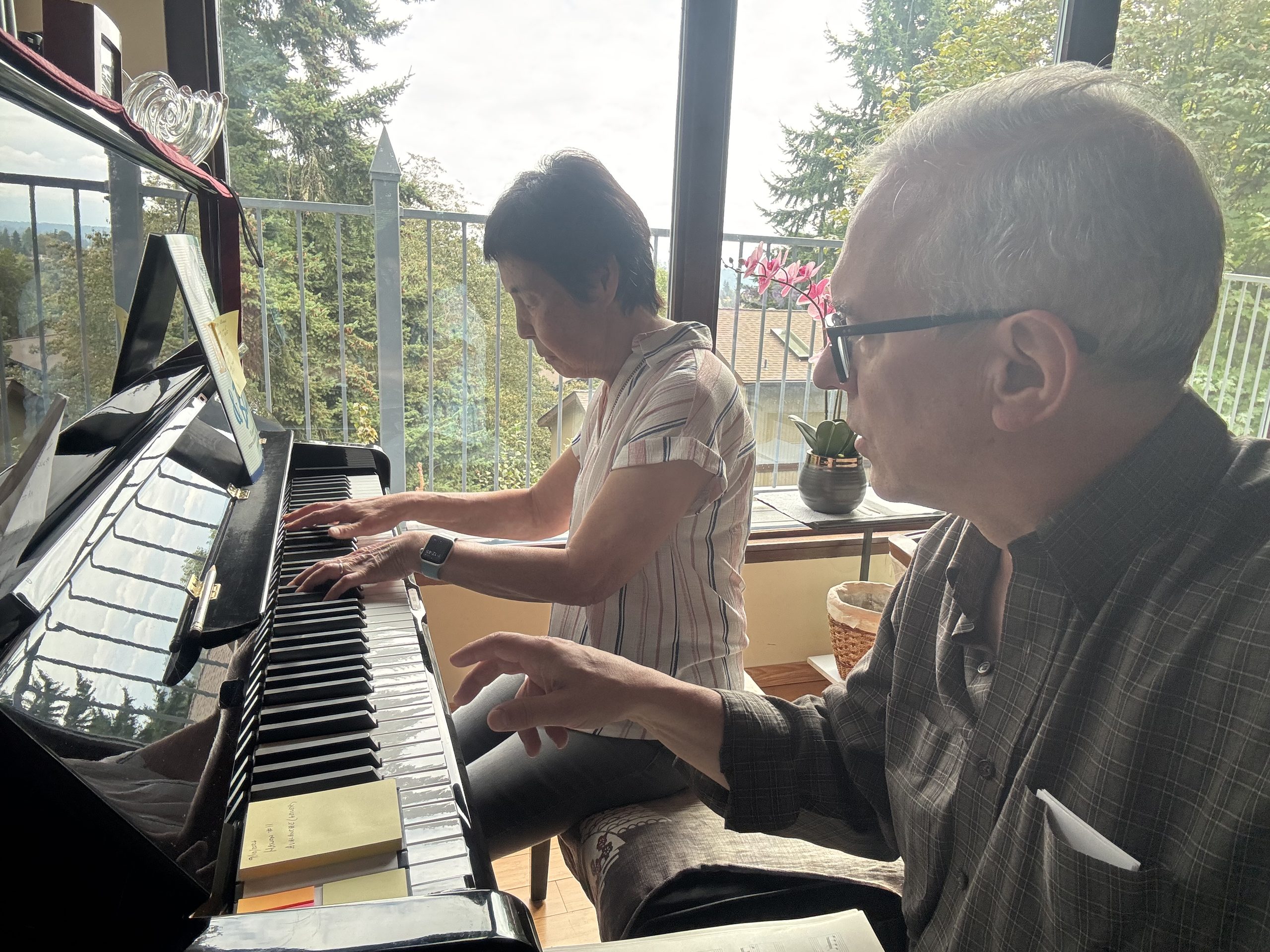
Brent Boon, a member of the Lake Washington Music Teachers Association, has been teaching piano to blind and low vision students for 5 years and is a member of the VTM Teacher Registry. “There is some additional work to teach music to this student set, however this has enabled me to be even more attentive and creative teaching piano which is fun. The rewards are often and innumerable when a simple drill or complex song is completed!” says Boon. Eventually, he would like to coach and nurture his students to participate in MAP. Though he teaches 26 sighted students, he is coordinating his piano teaching with his current 6 blind low vision students through the nonprofit: Pacific West Music of the Blind (PacificWestMusic.com)
VTM is recruiting teachers for the registry, and we need teachers in the Pacific Northwest. If you are a music teacher with experience working with blind students, please submit the application at this link: https://childrenseyefoundation.org/what-we-do/vision-through-music/how-to-get-involved/music-teachers/vtm-teacher-intake/
For music teachers without experience teaching blind children, VTM offers a virtual course with the Academy of Music for the Blind where the music teacher shadows AMB teachers and participates in teaching AMB students. Tuition for the course is paid by VTM. If you are interested, please submit the application at this link:
https://childrenseyefoundation.org/what-we-do/vision-through-music/how-to-get-involved/music-teachers/vtm-training-application/
Many blind children have the potential to become exceptional musicians, but even those who are not naturally gifted musicians show improved academic performance and communication skills with music instruction. Most of these children will tell you that music is the most important thing they do, and their parents are thrilled with their improved quality of life.
Music teachers of the blind can explore the mystery of musical ability in the blind and experience the excitement and satisfaction of working with blind students. Please join us in improving the lives of these students with quality music instruction.
1 – Ockelford A, Pring L, Welch G, Treffert D. Focus on Music: Exploring the musical interests and
abilities of blind and partially sighted children and young people with septo-optic dysplasia.
Institute of Education, University of London. 2006.
2 – Ockelford A, Mattawa C. Focus on Music 2: Exploring the musicality of children and young
people with retinopathy of prematurity. Institute of Education, University of London. 2009.